English


Casablanca to Marrakech 10-Day Itinerary: Complete Guide
Planning a Casablanca to Marrakech 10-Day Itinerary is an excellent way to discover several different sides of Morocco in one journey. Instead of limiting your trip to the country’s largest cities, a well-planned route can combine Atlantic coastal life, historic imperial cities, mountain landscapes, traditional villages, the Sahara Desert, and the vibrant atmosphere of Marrakech. As a result, ten days can provide a balanced introduction to Morocco without requiring you to spend the entire trip moving between destinations.
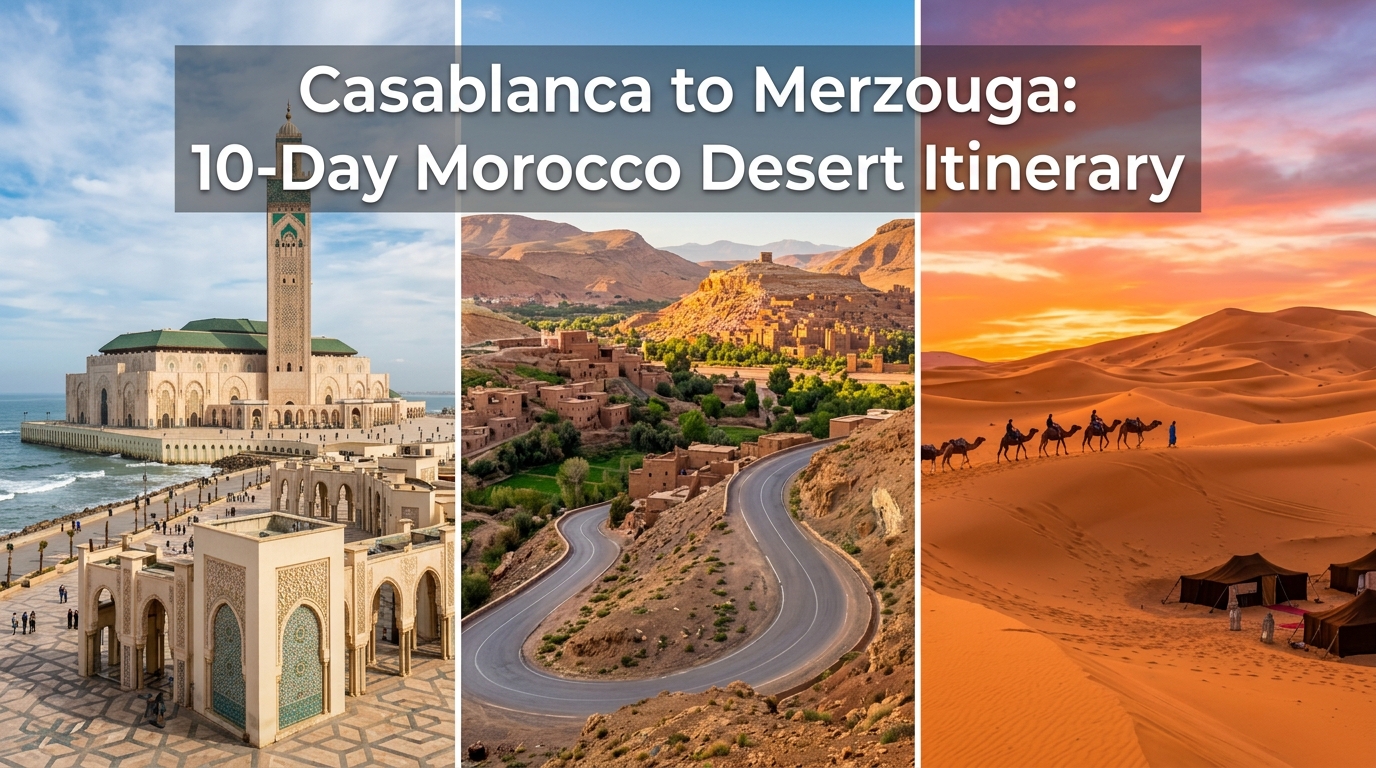
This itinerary is designed for travelers who want to experience Morocco progressively, beginning in Casablanca and finishing in Marrakech. Along the way, the route can include Rabat, Meknes, Fes, the Middle Atlas, Merzouga, the Sahara Desert, the Dades Valley, Ouarzazate, Ait Ben Haddou, and finally Marrakech. Whether you are considering independent travel, Morocco Private Tours, or a customized package through a travel agency Morocco travelers can use, this route offers a practical framework for organizing your trip.
Why Choose a Casablanca to Marrakech 10-Day Itinerary?
A Casablanca to Marrakech itinerary gives travelers the opportunity to see how dramatically Morocco’s landscapes and cultural environments can change over relatively short distances. Casablanca introduces modern Morocco and the Atlantic coast, while Rabat adds history and royal heritage. Fes then provides a deeper experience of traditional architecture, craftsmanship, and Medina life before the journey continues toward the mountains and desert.
Moreover, the southern part of the itinerary creates an entirely different experience. After crossing the Middle Atlas and traveling through southeastern Morocco, you reach Merzouga and the Sahara Desert. From there, the route continues through valleys, kasbahs, and dramatic landscapes before reaching Marrakech. Therefore, this is more than simply a journey between two major cities; it is a complete route through several of Morocco’s most recognizable environments.
Tours From Casablanca :
5 Days Tour From Sahara Sands to Atlas Mountains
7 Days Tour Enchanting Trails of Morocco
9 Days Tour Discover the Wonders of Morocco
10 Days Tour From Casablanca To Marrakech
12 Day Tour Through The imperial cities – Sahara – Chefchaouane
15 Days Tour To North & South Via Desert From Casablanca
9 Days Tour Immerse in the Beauty of Morocco
20 Days Tour Exotic Treasures of Morocco
24 Day Tour Moroccan Delights and Cultural Charms
Who Is This 10-Day Morocco Itinerary For?
This 10 day Morocco itinerary works well for first-time visitors who want a combination of culture, history, landscapes, and desert experiences. It can also suit couples, families, photographers, and travelers who prefer private transportation and flexible sightseeing. Because the itinerary connects major destinations rather than focusing on one region, it gives travelers a broad introduction to the country.
At the same time, the route can be adjusted depending on your interests. Travelers interested primarily in culture may spend more time in Fes and Marrakech. Those who are particularly interested in landscapes can give more attention to the Atlas Mountains and Sahara. Meanwhile, travelers looking for comfort can adapt the route through Luxury Morocco Tours or private arrangements with upgraded accommodation and transportation.
Day 1: Arrive in Casablanca
Your Casablanca to Marrakech 10-Day Itinerary begins in Casablanca, Morocco’s major Atlantic city and an important international arrival point. Depending on your flight schedule, the first day can be relatively relaxed. After arriving, you can transfer to your accommodation, check in, and take some time to recover from the journey before beginning your sightseeing.
If you arrive early enough, Casablanca offers several places to explore. The Hassan II Mosque is one of the city’s most recognizable landmarks and provides an impressive introduction to Moroccan architecture. You can also explore parts of the city center, walk along the Corniche, or enjoy a meal featuring Moroccan cuisine. Since this is the first day, however, it is usually better not to overload your schedule.
What to See in Casablanca
Casablanca has a different atmosphere from historic cities such as Fes or Marrakech. Its streets, architecture, business districts, restaurants, and Atlantic setting create a more modern urban environment. For this reason, travelers should approach Casablanca as an introduction to contemporary Morocco rather than expecting a traditional Medina experience.
The Hassan II Mosque is particularly significant because of its architectural scale and location beside the Atlantic Ocean. Beyond the mosque, the city center and coastal areas can provide additional opportunities to experience local life. If your arrival time allows, a short city visit can make the first day more interesting while still leaving enough time to rest.
Day 2: Casablanca to Rabat and Fes
On the second day, the journey continues from Casablanca toward Rabat before heading to Fes. This creates a natural transition from modern Casablanca to Morocco’s historic imperial heritage. Rabat, the country’s capital, provides an opportunity to explore important historical sites before continuing east toward Fes.
Rabat can be visited at a comfortable pace, depending on your departure time and transportation arrangements. After exploring the capital, continue toward Fes and arrive later in the day. Once you check into your accommodation, you can spend the evening relaxing or taking a first walk around the city if time permits.
Exploring Rabat Along the Way
Rabat is worth including because it provides a different perspective from Casablanca. The city combines government institutions, historic monuments, coastal scenery, and traditional neighborhoods. A short visit can therefore add another dimension to your Morocco Travel Guide experience without requiring a separate full-day stay.
Depending on your interests, you may visit the Kasbah of the Udayas, see the Hassan Tower, and explore surrounding historic areas. Afterwards, continue toward Fes. The journey itself also provides a useful transition between Morocco’s Atlantic northwestern region and the country’s historic interior.
Day 3: Discover Fes
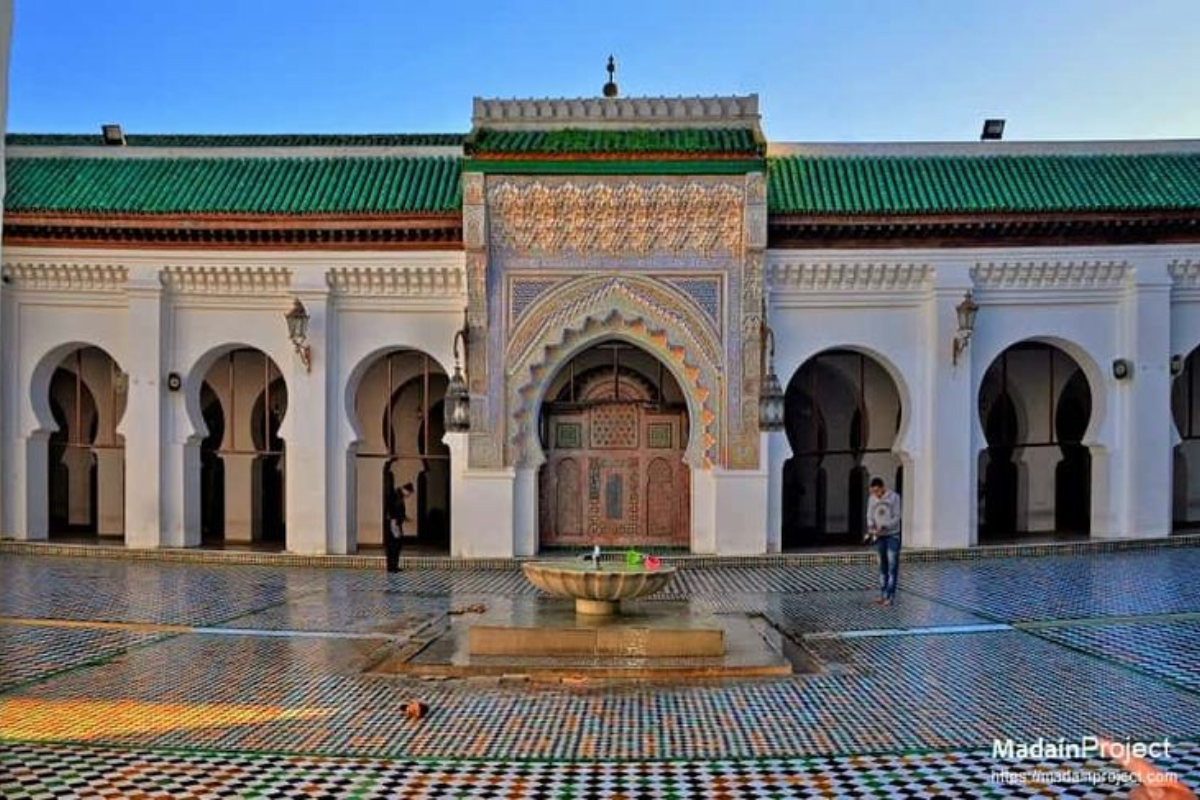
Day three is dedicated to Fes, one of the most important cultural destinations on this Morocco itinerary from Casablanca. The city is particularly famous for its historic Medina, traditional craftsmanship, architecture, markets, and long cultural history. Consequently, allowing a full day for Fes makes it possible to explore the city without rushing from one attraction to another.
The Medina is the heart of the experience. Its narrow streets, traditional buildings, markets, workshops, and artisan areas create an environment that is very different from Casablanca. Rather than simply checking off landmarks, take time to observe the details of the city. Doors, tilework, carved wood, textiles, metalwork, and everyday street activity can all contribute to the experience.
Fes Medina and Cultural Heritage
The Medina of Fes is particularly suitable for travelers interested in traditional Moroccan culture. Walking through its streets provides opportunities to discover historic architecture and traditional crafts that remain important to the city’s identity. A local guide can also make navigation easier and provide additional historical context.
For travelers interested in photography, Fes can be especially rewarding. Narrow streets, changing light, artisan workshops, traditional architecture, and market scenes create many opportunities for travel photography. A longer trip can even be adapted into a dedicated Fes Photography Tour, although this is not necessary for ordinary visitors.
Where to Stay in Fes
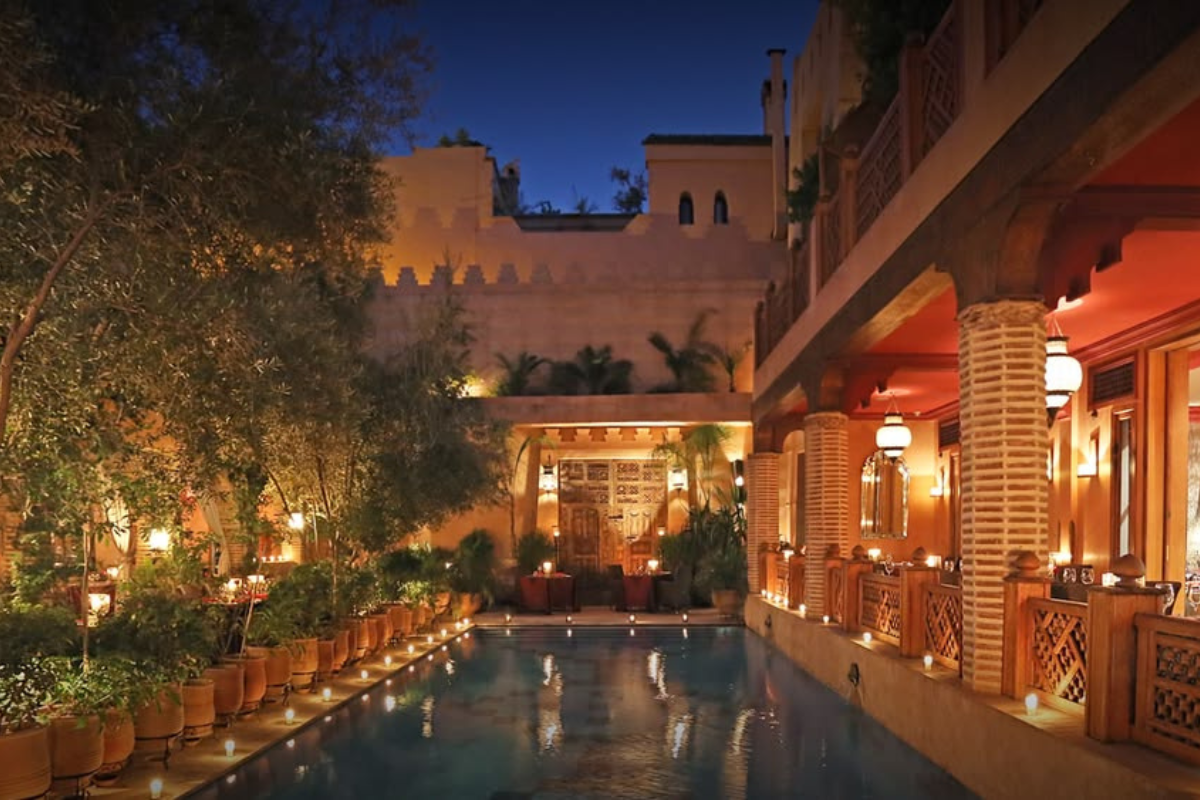
For a more traditional experience, consider staying in a riad within or close to the Medina. Riads often provide a quieter interior environment compared with the busy streets outside. Alternatively, modern hotels in the Ville Nouvelle can provide easier vehicle access and a more contemporary atmosphere.
The choice depends largely on your priorities. Travelers who want cultural immersion may prefer a riad, while those prioritizing convenience and modern facilities may prefer a hotel outside the historic center. Either way, staying in Fes overnight makes the following desert journey more manageable.
Tours From Fes :
2 Days Tour From Fez To Merzouga & The Sahara Desert
3 Days Tour From Fes To Marrakech Through Desert Merzouga
4 Days Tour From Fes To Marrakech Via Erg Chebbi
5 Days Tour From Fez To Marrakech Through Desert Tour
6 Days Tour From Fez To Marrakech Sightseeing
7 Days From Fes Desert Tour To Marrakech Via Merzouga Desert
Day 4: Fes to Merzouga Through the Middle Atlas
Day four is one of the most scenic parts of the Casablanca to Marrakech 10-Day Itinerary. The route leaves Fes and heads south toward the Middle Atlas Mountains before continuing toward southeastern Morocco and Merzouga. Because this is a long travel day, an early departure is recommended.
The landscape changes gradually as you move away from Fes. Mountain scenery, forests, valleys, rural communities, and changing elevations create a very different environment from the cities. Stops along the route allow you to stretch your legs, take photographs, enjoy local food, and appreciate the transition toward the desert.
The Middle Atlas Mountains
The Middle Atlas is an important geographical transition within the itinerary. Instead of moving directly from Fes to the desert, the route passes through mountain landscapes and high-altitude environments. This contrast is one of the reasons a 10 day Morocco trip from Casablanca can be so varied.
As the journey continues south and east, the scenery becomes increasingly arid. Eventually, the mountains and plateaus give way to the landscapes associated with southeastern Morocco. By the time you approach Merzouga, the environment has changed dramatically from the green and urban areas visited earlier in the trip.
Day 5: Merzouga and the Sahara Desert
Day five is dedicated to one of the most anticipated experiences of the journey: the Sahara Desert around Merzouga. After arriving in the region, you can explore the surrounding area before beginning a desert experience later in the day.
A camel ride toward a desert camp is one traditional option. The journey across the dunes allows travelers to experience the changing landscape at a slower pace. As the sun begins to lower, the colors and shadows across the sand change, creating a memorable atmosphere. After reaching the camp, guests can enjoy dinner and an evening under the desert sky.
Camel Ride in Merzouga
A camel trek is one of the experiences most commonly associated with Morocco Desert Tours. The ride gives travelers an opportunity to cross the dunes without the noise of a vehicle and experience the desert at a slower rhythm.
However, travelers who are not comfortable riding a camel can also ask about alternative transportation options, depending on the tour arrangement. A 4×4 transfer can be used for certain parts of the desert experience, making the itinerary more flexible for different travelers.
Spending the Night in a Sahara Camp
A night in a Sahara camp adds another dimension to the itinerary. After dinner, travelers can spend time outside, listen to traditional music, and observe the night sky away from major urban areas. The experience is particularly different from staying in a city hotel because the surrounding environment becomes part of the accommodation itself.
Camp options can vary considerably. Some travelers prefer simple traditional camps, while others choose more comfortable accommodations with private facilities. Therefore, when comparing Morocco Tour Packages, check exactly what type of desert camp is included rather than assuming that all camps offer the same facilities.
Day 6: Merzouga to Dades Valley
Wake up early on day six if you want to see sunrise over the dunes. Morning light can transform the appearance of the desert, and the quiet atmosphere provides a different experience from the previous evening.
After breakfast, leave the Merzouga area and continue toward the Dades Valley. The route passes through changing desert and mountain landscapes, giving you another opportunity to observe how quickly Morocco’s geography can change. Stops along the way can include scenic viewpoints and local communities.
From the Sahara to the Dades Valley
The transition from the dunes of Merzouga toward the Dades Valley demonstrates the geographical diversity of southeastern Morocco. Instead of remaining in a uniform desert environment, the journey introduces rocky landscapes, valleys, agricultural areas, and mountain scenery.
This part of the journey is also useful for travelers who enjoy road trips. The route itself becomes part of the experience, especially when combined with scenic stops. A private itinerary gives travelers greater flexibility to pause for photographs or spend additional time at places that interest them.
Day 7: Dades Valley, Todra Gorge and Ouarzazate
Day seven continues through some of southern Morocco’s best-known landscapes. Depending on your route, you can explore the Dades Valley and Todra Gorge before continuing toward Ouarzazate.
The Dades region is known for its dramatic rock formations, valleys, and winding roads. Todra Gorge provides another impressive landscape, with steep rock walls creating a strong contrast with the surrounding valleys. These locations offer a completely different visual environment from both Fes and the Sahara.
Todra Gorge
Todra Gorge is a natural highlight of the southern route. The steep canyon walls create a dramatic setting and make the area suitable for short walks and photography. Depending on the season and conditions, the surrounding region can also provide opportunities for longer outdoor activities.
For travelers interested in landscape photography, this section of the itinerary can be particularly interesting. The combination of rock formations, roads, vegetation, and mountain scenery provides a variety of compositions. Consequently, travelers who enjoy Morocco Photo Tours can adapt this part of the journey to allow additional photography time.
Arriving in Ouarzazate
Continue toward Ouarzazate after exploring the valleys and gorge. Often associated with Morocco’s southern landscapes and film industry, Ouarzazate can serve as a convenient overnight stop before continuing toward Marrakech.
The city also acts as a gateway between the Sahara region and the High Atlas. Staying overnight here avoids making the journey from the desert to Marrakech in a single exhausting drive. Therefore, including Ouarzazate helps maintain a more comfortable pace throughout the ten-day route.
Day 8: Ouarzazate, Ait Ben Haddou and Marrakech
Day eight is another important transition day. After leaving Ouarzazate, the route continues toward Ait Ben Haddou before crossing the High Atlas Mountains and eventually reaching Marrakech.
Ait Ben Haddou is one of the most recognizable historic fortified villages in Morocco. Its earthen architecture and elevated position make it a particularly distinctive stop. Travelers can explore the settlement, walk through its passages, and appreciate the traditional building techniques visible throughout the site.
Visiting Ait Ben Haddou
Ait Ben Haddou provides a strong cultural and architectural contrast with the modern architecture of Casablanca. The historic settlement is especially interesting for travelers who enjoy architecture, history, and photography.
Take your time exploring rather than treating the visit as a quick photo stop. The surrounding landscape also provides different perspectives of the settlement. Photographers can therefore benefit from moving around the area and considering how the light and viewpoint change the appearance of the buildings.
Crossing the High Atlas
After visiting Ait Ben Haddou, continue toward Marrakech across the High Atlas. The road provides mountain scenery and changing elevations before gradually descending toward the Marrakech region.
This section is another reason the Casablanca to Marrakech 10 day tour is more varied than a simple city-to-city trip. During one journey, travelers can experience Atlantic coastline, imperial cities, forests, mountains, desert dunes, valleys, kasbahs, and finally a major Moroccan city.
Day 9: Explore Marrakech
By day nine, you have reached Marrakech and can slow the pace down. After several days of road travel, a full day in Marrakech provides an opportunity to explore the city without constantly packing and unpacking.
Marrakech is known for its Medina, souks, historic architecture, gardens, food, and lively public spaces. Start with the historic center and gradually explore the areas that interest you most. Because the city offers many attractions, avoid trying to see everything in a few hours.
Marrakech Medina and Jemaa el-Fna
The Medina is one of the central experiences of Marrakech. Its streets connect markets, restaurants, historic buildings, workshops, and public spaces. Walking through the area allows you to discover the city at your own pace.
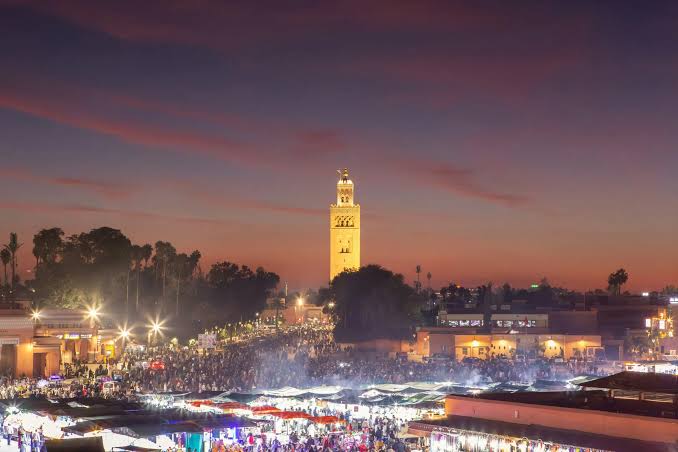
Jemaa el-Fna is another important stop, particularly later in the day when the square becomes more active. Nearby souks provide opportunities to discover Moroccan handicrafts, textiles, spices, leather goods, and other products. If shopping is part of your trip, remember to compare prices and consider the quality of products before purchasing.
Koutoubia Mosque and Historic Marrakech
The Koutoubia Mosque is one of Marrakech’s most recognizable landmarks and an important reference point when exploring the city. From there, you can continue toward other historic areas and attractions.
Marrakech also offers a wide variety of restaurants and cafés. After several days of travel, this is a good opportunity to slow down and enjoy Moroccan cuisine. Tagines, couscous, pastilla, Moroccan salads, mint tea, and other local dishes can form part of the culinary experience.
Day 10: Marrakech and Departure
The final day of the Casablanca to Marrakech 10-Day Itinerary depends on your departure time. If your flight is later in the day, you may have time for a final walk, breakfast, shopping, or a short visit to a nearby attraction.
If your flight is early, keep the morning simple and allow sufficient time for the transfer to the airport. Because Marrakech is the final destination, you do not need to return to Casablanca unless your flight itinerary requires it.
Extending Your Morocco Trip
Ten days provide a strong introduction to Morocco, but travelers with additional time can extend the journey. Marrakech can serve as a base for Tours from Marrakech to destinations such as the Atlas Mountains, Essaouira, or the Agafay Desert.
Similarly, travelers who have more time can consider adding Chefchaouen, Tangier, or additional days in Fes. A longer route can also incorporate experiences such as Custom Morocco Tours, photography-focused travel, family activities, or more time in the Sahara.
Complete Casablanca to Marrakech 10-Day Itinerary at a Glance
For travelers who want a quick overview, the route can be organized as follows:
Day 1: Arrive in Casablanca and explore the city
Day 2: Casablanca → Rabat → Fes
Day 3: Full day exploring Fes
Day 4: Fes → Middle Atlas → Merzouga
Day 5: Explore Merzouga and spend the night in the Sahara
Day 6: Merzouga → Dades Valley
Day 7: Dades Valley → Todra Gorge → Ouarzazate
Day 8: Ouarzazate → Ait Ben Haddou → High Atlas → Marrakech
Day 9: Explore Marrakech
Day 10: Marrakech and departure
This structure balances major cities with natural landscapes and allows the Sahara to remain a central part of the journey. Of course, travel times and stops can vary depending on transportation, weather, road conditions, accommodation, and the exact tour design.
How to Travel from Casablanca to Marrakech During 10 Days
There are several ways to organize this route. A private vehicle with a driver provides the greatest flexibility because you can stop at viewpoints, villages, restaurants, and attractions along the way. This approach is particularly useful for travelers who want to photograph landscapes or adjust the pace according to their interests.
Alternatively, parts of the journey can be completed using trains and other public transportation, particularly between major cities. However, the Sahara and southern Morocco require additional planning because many of the most interesting locations are spread across large distances. Therefore, combining transportation methods can work, but a private itinerary is often simpler for a route covering so many regions.
Private Morocco Tours
Morocco Private Tours can be adapted around your preferred travel pace, accommodation style, activities, and destinations. This can be particularly useful for families, couples, photographers, and travelers who do not want to follow a fixed group schedule.
A private trip can also make it easier to modify the itinerary. For example, you may want additional time in Fes, a longer Sahara experience, or a shorter stay in Casablanca. These adjustments can be discussed when creating a custom route.
Choosing Accommodation for a 10-Day Morocco Trip
Accommodation can significantly influence the overall experience. In Casablanca and Marrakech, travelers can choose from modern hotels, boutique properties, riads, and luxury accommodation. Fes is particularly suitable for a riad experience because of the city’s historic Medina.
In the desert, accommodation is different. Sahara camps range from relatively simple tents to more comfortable luxury camps. When booking Morocco Holiday Packages, confirm whether meals, transportation, private bathrooms, and other facilities are included.
Riads vs Hotels
Riads are traditional Moroccan houses organized around an interior courtyard. They can provide a more intimate atmosphere and are particularly common in historic Medinas.
Hotels, meanwhile, can offer larger facilities, easier vehicle access, swimming pools, restaurants, and other services. Neither option is universally suitable for every traveler. Your choice should depend on whether you prioritize traditional atmosphere, convenience, privacy, or hotel facilities.
What to Eat During Your Morocco Itinerary
Food is an important part of any Morocco Vacation Guide, and a ten-day itinerary provides many opportunities to try regional dishes. Moroccan cuisine includes tagines, couscous, harira, pastilla, salads, grilled meats, breads, pastries, and mint tea.
Each destination can also offer different culinary experiences. In Casablanca, you can find a broad range of restaurants and international influences. Fes is particularly interesting for travelers who want to explore traditional Moroccan cuisine, while Marrakech offers everything from local street food to upscale dining.
Moroccan Food Experiences
Do not limit your culinary experience to restaurants. Local markets and traditional food stalls can also provide opportunities to discover Moroccan flavors. However, travelers should use normal food-safety precautions, especially when eating foods that have been sitting unrefrigerated.
Trying different dishes throughout the trip can also help you understand the diversity of Moroccan cuisine. Instead of ordering the same meal every day, consider sampling different preparations and regional specialties.
Best Time for a Casablanca to Marrakech 10-Day Itinerary
The best time for this itinerary depends on which parts of Morocco matter most to you. Spring and autumn are often attractive periods for travelers who want to combine cities, mountains, and desert without the strongest summer heat.
Winter can provide pleasant conditions in many cities but may bring colder nights in the desert and snow or difficult conditions in mountain areas. Summer can be very hot, particularly in inland and desert regions, although coastal destinations may provide more moderate conditions.
Spring and Autumn
Spring and autumn can be comfortable seasons for a multi-region Morocco trip. Temperatures are often more manageable for walking through Medinas and exploring outdoor attractions.
However, conditions vary by region. Casablanca, Fes, the Atlas Mountains, Merzouga, and Marrakech do not necessarily experience identical weather. Therefore, check conditions for each destination rather than relying on a single national forecast.
Summer
Summer travelers should prepare for high temperatures, especially during the middle of the day in inland areas and the desert. Plan outdoor activities around cooler periods when possible and stay hydrated.
If you travel during summer, air-conditioned accommodation and vehicles can make the journey more comfortable. Early morning sightseeing can also help you avoid the strongest daytime heat.
Winter
Winter can be an interesting time for Morocco because daytime temperatures can be comfortable in many locations. However, nights can become cold in the Sahara and mountain regions.
Pack layers rather than relying only on warm-weather clothing. This is especially important because the same ten-day trip can include coastal cities, high mountains, and desert landscapes.
How Much Does a Casablanca to Marrakech 10-Day Trip Cost?
The cost of a 10 day Morocco trip from Casablanca depends on several factors, including accommodation, transportation, season, activities, group size, and whether the trip is private or shared.
Budget travelers can reduce costs by choosing simpler accommodation and public transportation. Mid-range travelers may prefer comfortable hotels and private transfers for selected sections. Luxury travelers can choose higher-end hotels, premium desert camps, private transportation, and personalized services.
What Can Affect the Price?
Accommodation is usually one of the largest variables. A traditional riad, standard hotel, and luxury property can have significantly different prices.
Transportation also matters. A private vehicle and driver generally costs more than public transportation, but it provides additional flexibility. Desert activities, guided visits, entrance fees, meals, and optional excursions can also influence the final budget.
Therefore, when comparing Morocco Tour Packages, look beyond the headline price and check exactly what is included.
Private vs Group Morocco Tours
A group tour can be a practical option for travelers who enjoy meeting other people and following a predetermined schedule. It can also simplify logistics because transportation and accommodation are arranged in advance.
A private tour offers more flexibility. You can usually adjust departure times, choose additional stops, spend longer at locations that interest you, and adapt the itinerary to your travel style. For photographers or families, this flexibility can be particularly useful.
How to Customize This 10-Day Morocco Itinerary
One advantage of using this route as a starting point is that it can be customized. A traveler interested in history might add more time in Fes. Someone focused on the Sahara could extend the Merzouga stay. A photographer might reduce the number of daily stops to allow more time for sunrise, sunset, and local scenes.
Similarly, travelers interested in luxury experiences can upgrade accommodation and transportation. Those interested in cultural travel can add workshops, food experiences, local guides, or heritage visits. This is where Custom Morocco Tours can provide a more personalized approach.
Morocco Tours Services and Tailored Trips
Professional Morocco Tours Services can help organize transportation, accommodation, guides, desert camps, excursions, and other elements into one itinerary. A Tour operator in Morocco may also be able to coordinate different parts of the trip so travelers do not have to arrange each component independently.
For travelers planning corporate or special events, Morocco can also support more specialized travel arrangements, including Morocco DMC, Morocco MICE, and event-related services. However, these services are separate from the standard leisure itinerary described in this guide.
Optional Experiences to Add
Although this route already includes many major destinations, several optional experiences can be added depending on your interests. For example, travelers staying in Marrakech can arrange day trips to the Atlas Mountains or other nearby destinations.
Photography enthusiasts can also adapt the route into a dedicated Morocco Photography Tour. Casablanca, Fes, Marrakech, the Atlas Mountains, Ait Ben Haddou, and the Sahara each provide very different photographic environments.
Marrakech Photography Tour
Marrakech offers opportunities for architecture, street scenes, markets, gardens, traditional crafts, and colorful details. Photographers can spend time in the Medina, explore different neighborhoods, and photograph changing light throughout the day.
A dedicated Marrakech Photography Tour can be particularly useful for travelers who want to organize their schedule around photography rather than standard sightseeing.
Casablanca Photography Tour
Casablanca provides a more contemporary photographic perspective. Modern architecture, traditional neighborhoods, the Atlantic coastline, public spaces, and the Hassan II Mosque can all become subjects.
A Casablanca Photography Tour can therefore complement photography experiences in Fes, Marrakech, and the Sahara by showing another side of Morocco.
Tips for Planning Your Morocco Itinerary
First, avoid trying to schedule every minute of the journey. Morocco involves considerable travel distances, particularly between Fes, Merzouga, and Marrakech. Leaving some flexibility makes the experience more comfortable.
Second, choose your accommodation carefully. Location can save significant time, especially in cities where historic centers have restricted vehicle access. Finally, confirm exactly what is included in your tour before booking, particularly transportation, meals, guides, desert activities, and accommodation.
Book Important Services in Advance
During busy travel periods, popular riads, desert camps, and private drivers can become limited. Booking the main elements of your itinerary ahead of time can therefore reduce last-minute complications.
At the same time, do not feel that every optional activity needs to be booked months in advance. Some experiences can be arranged locally, depending on availability and season.
What to Pack for 10 Days in Morocco
Pack clothing suitable for different climates because this itinerary crosses several geographical regions. Lightweight clothing can work well during warmer periods, while layers are useful for mountain and desert evenings.
Comfortable walking shoes are particularly important. You will likely spend considerable time walking through Medinas, historic sites, and outdoor areas. Sunglasses, sunscreen, a reusable water bottle, and basic personal items are also useful.
Packing for the Sahara
For the Sahara, bring layers because temperatures can change significantly between daytime and nighttime. A light jacket or warmer layer can be useful during cooler evenings.
A small day bag can also be practical when you leave your main luggage at your accommodation or transfer it to a desert camp. Keep essentials such as documents, phone, charger, medication, and water easily accessible.
Is Ten Days Enough for Casablanca to Marrakech?
Ten days can provide enough time for a meaningful introduction to Morocco, especially if your goal is to combine cities, culture, mountains, desert, and Marrakech in one trip.
However, it is important to understand that this is an active itinerary. Several days involve long drives, so travelers who prefer a slower pace may want to extend the trip to twelve or fourteen days. More time allows longer stays in Fes, Merzouga, Dades, Ouarzazate, or Marrakech.
Frequently Asked Questions
Is Casablanca to Marrakech worth doing in 10 days?
Yes, a ten-day route can connect several major Moroccan destinations while ending in Marrakech. The itinerary becomes particularly varied when it includes Fes, the Middle Atlas, Merzouga, the Sahara, Dades, Ouarzazate, and Ait Ben Haddou.
What is the best route from Casablanca to Marrakech?
A comprehensive route can travel from Casablanca to Rabat and Fes, then continue through the Middle Atlas to Merzouga and the Sahara before crossing the Dades region and Ouarzazate and finally reaching Marrakech.
How many days should I spend in Fes?
Two nights or approximately one full sightseeing day can work for a first visit, although travelers interested in history and culture may prefer longer.
Can I visit the Sahara during a 10-day Morocco trip?
Yes. Merzouga can be incorporated into a ten-day route, although reaching the Sahara requires substantial travel time from Fes and toward Marrakech.
Is a private tour better for this itinerary?
A private itinerary offers greater flexibility in terms of departure times, stops, accommodation, and activities. A group tour can provide a more structured experience and may suit travelers who prefer traveling with others.
Can I customize this itinerary?
Yes. The route can be modified according to your interests, budget, travel pace, and accommodation preferences. Custom Morocco Tours can be designed around cultural experiences, photography, luxury travel, family travel, or desert experiences.
Should I start in Casablanca or Marrakech?
If your international flight arrives in Casablanca, beginning there is practical. Ending in Marrakech also works well because you avoid returning to your starting point and can depart from Marrakech if your flight arrangements allow it.
What are the main highlights of this itinerary?
The major highlights include Casablanca, Rabat, Fes, the Middle Atlas, Merzouga, the Sahara Desert, Dades Valley, Todra Gorge, Ouarzazate, Ait Ben Haddou, the High Atlas, and Marrakech.
Final Thoughts: Casablanca to Marrakech in 10 Days
A Casablanca to Marrakech 10-Day Itinerary can provide a remarkably varied introduction to Morocco. The route combines major cities with historic Medinas, mountain landscapes, desert dunes, traditional villages, valleys, kasbahs, and the lively atmosphere of Marrakech.
Most importantly, the journey does not simply connect two cities. It allows travelers to experience the geographical and cultural contrasts that make Morocco such a diverse destination. Starting in Casablanca and finishing in Marrakech creates a logical route, while adding Fes and Merzouga transforms the journey into a much broader Moroccan adventure.
Whether you choose a self-planned journey, Morocco Private Tours, a customized itinerary, or one of the available Morocco Tour Packages, the key is to balance sightseeing with realistic travel time. With ten days available, planning the route carefully will allow you to experience the country’s major highlights while still leaving room to enjoy the journey itself.
If you want a more personalized experience, Morocco Tours Services can adapt this itinerary around your preferred hotels, transportation, desert camp, activities, and travel pace. For travelers looking for a broader Morocco Travel Guide, this route can also serve as the foundation for a longer trip that adds Chefchaouen, Tangier, Essaouira, or additional days in Marrakech.