English


Fez, Morocco: The City That Rewards Travelers Who Slow Down
Fez is not a city you can rush. Its medina — the largest medieval urban area in the world still in active daily use — is designed for slow movement, accidental discovery, and the kind of gradual understanding that only comes from spending real time inside a place rather than passing through it. Travelers who arrive with a checklist and leave after one quick day tend to describe Fez as overwhelming. Travelers who arrive with curiosity and stay for two or three days tend to describe it as one of the most memorable cities they have ever visited. The city is exactly the same in both cases. The difference is entirely in the approach.
This article is a practical, experience-based look at Fez: what makes it worth the time, how to structure your days, which stops deliver genuine depth rather than tourist performance, and how Fez fits into a broader Morocco Travel Guide itinerary. If you want to organize your time in the city efficiently without sacrificing the experience, start with Tours from Fez, which connect the city’s highlights to each other and to onward destinations in a way that protects both your time and your energy.
What Fez actually is: three cities in one
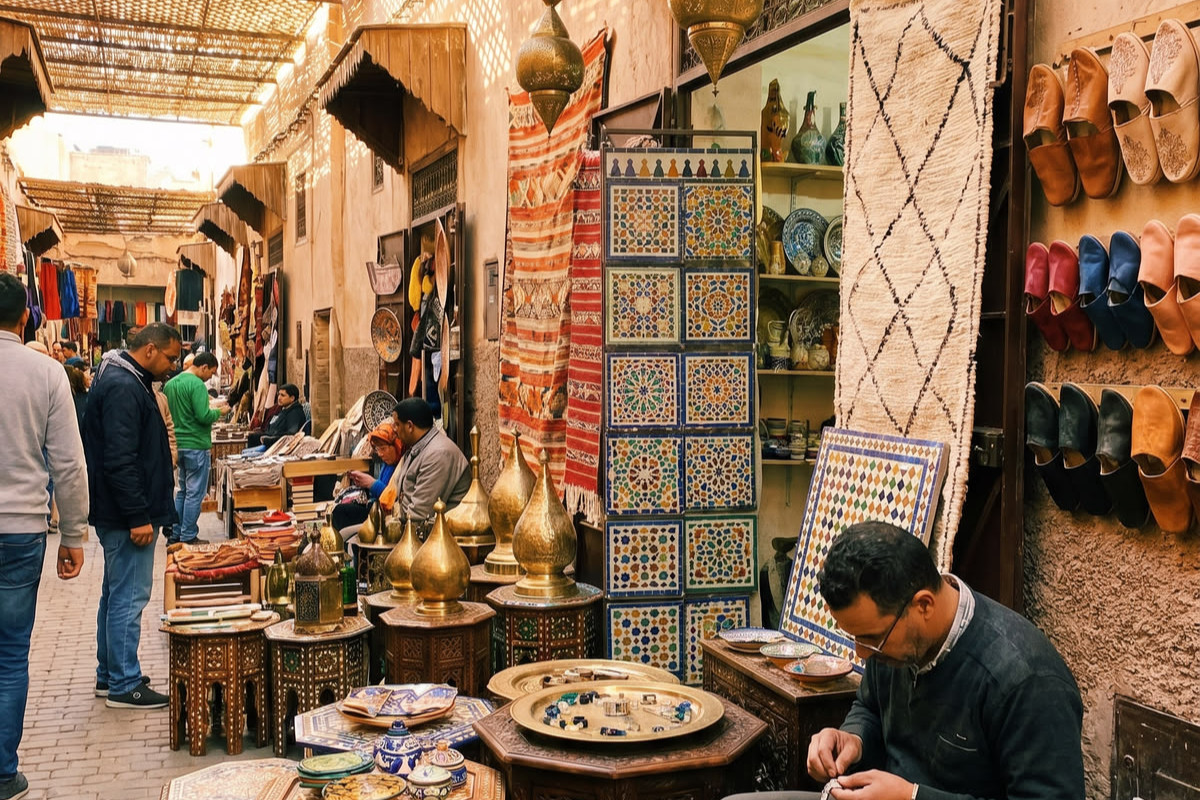
Most travelers arrive in Fez thinking of it as “one medina city,” but Fez is actually three distinct urban areas layered on top of each other across different centuries. Fes el Bali is the oldest and most complex: a ninth-century medina with over nine thousand lanes, craft workshops, mosques, madrasas, and residential neighborhoods all compressed into an area you can walk across in about forty minutes — if you could walk in a straight line, which you cannot. Fes el Jdid is a thirteenth-century addition that includes the Royal Palace, the former Jewish Quarter (Mellah), and a different architectural rhythm. And the Ville Nouvelle is the French-era new town built during the Protectorate period with broad boulevards, European-influenced buildings, and a more modern commercial character.
Understanding this three-part structure helps you plan your time much more effectively. Fes el Bali is where you spend the majority of your cultural time. Fes el Jdid is worth a half-day for heritage depth and a quieter medina experience. The Ville Nouvelle is useful for restaurants, hotels, and the kind of easy navigation that rests your brain after intensive medina days. Most well-designed Tours from Fez build this three-part logic into the daily structure so you experience all of Fez rather than only its most photographed corners.
The medina of Fes el Bali: why getting lost is not the strategy
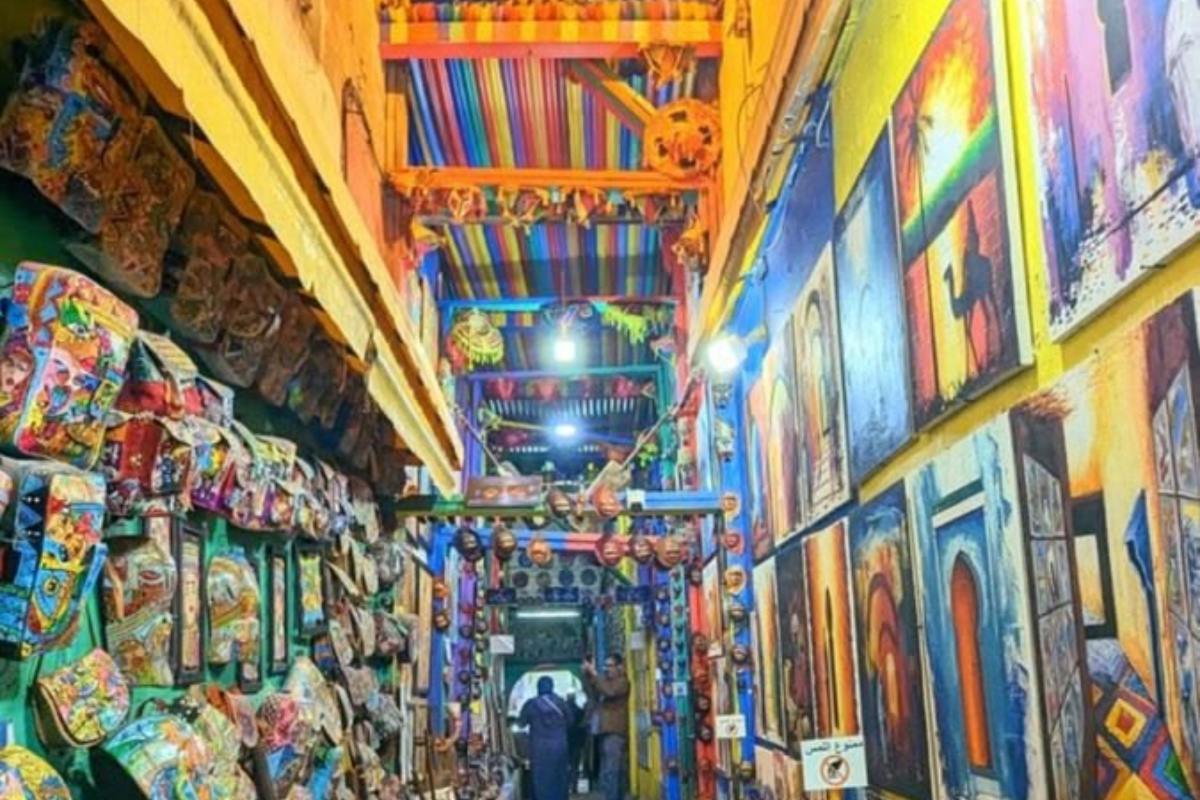
The idea of “getting lost in the Fez medina” sounds romantic and is genuinely enjoyable in small doses. As a full-day strategy, however, it produces exhaustion rather than discovery, because the medina is complex enough that random wandering tends to loop you back through the same tourist-facing lanes rather than into the craft districts, residential neighborhoods, and quiet corners that make Fez extraordinary. The travelers who see the most of Fes el Bali in a limited time are the ones who combine a structured guided introduction on day one with more confident independent wandering on day two.
A good local guide in Fez does not simply lead you to the famous stops. That organizational logic has been in place for centuries, and once you understand it, the medina stops feeling like a maze and starts feeling like a map. This is why including a guided element through Tours from Fez on your first medina day consistently produces better second-day independent exploration than arriving without any orientation.
The madrasas: architecture that earns the word “extraordinary”
Fez has two madrasas that rank among the finest examples of Moroccan architectural craftsmanship anywhere in the country. The Bou Inania Madrasa, built in the fourteenth century, is the larger of the two and combines zellige tilework, carved stucco panels, and cedar wood lattice screens in a way that demonstrates multiple craft traditions working together at the highest level.
Both buildings were originally Quranic schools, and the student cells on the upper floors give you a sense of what daily life looked like for young scholars studying here centuries ago. The central courtyards, with their marble fountains and light-filled geometry, are among the most genuinely beautiful interior spaces in Morocco. Visiting both in sequence, with a guide who can explain the specific craftsmen and techniques involved in their construction, is one of the most consistently rewarding experiences in Fez.
Qarawiyyin: the oldest continuously operating university in the world
The Qarawiyyin mosque and university complex, founded in 859 CE, holds the distinction of being the oldest continuously operating institution of higher learning in the world. Non-Muslim visitors cannot enter the prayer halls, but the building’s scale, its relationship to the surrounding medina, and the historical significance of the institution itself are all worth understanding even from the periphery. Some areas adjacent to the mosque allow partial views of the interior courtyard architecture, which is exceptional in its detail.
What makes this stop meaningful beyond the architecture is the context. The Qarawiyyin was founded by a woman — Fatima al-Fihri — at a time when the concept of institutionalized higher learning was just emerging globally. For over eleven centuries, it has been a center of Islamic scholarship, legal thought, and cultural transmission. That context changes how you see the entire city.
The Jewish Quarter (Mellah) and Fez’s layered religious history
Fez el Jdid contains one of Morocco’s most historically significant Jewish quarters, established in the thirteenth century as a designated area for the city’s Jewish community. The Mellah has its own architectural character — taller buildings with more external windows than the traditional medina style — and contains several restored synagogues, a historic Jewish cemetery, and residential streets that reflect a distinct urban history within the broader city.
The Mellah is quieter and less tourist-facing than Fes el Bali, which makes it a valuable counterpoint on a second day in Fez. Walking through it with a guide who understands the history of Jewish-Moroccan relations gives you access to a story that is both complex and important for understanding modern Morocco. Travelers interested in deeper cultural and heritage themes will find this area one of the most intellectually rewarding stops in the city.
Food in Fez: why the city has a genuine culinary reputation
The city’s cooking reflects centuries of trade-route influence, agricultural diversity in the surrounding region, and a strong household tradition of elaborate, slow-cooked preparation. Dishes that are simplified or abbreviated elsewhere — pastilla, harira, mrouzia, rfissa — appear in Fez in their most complete and carefully constructed versions.
Street food in the medina is excellent and affordable. The bread ovens scattered throughout the residential lanes bake fresh throughout the morning, and the food market streets offer a rotating selection of prepared snacks, cooked meats, and seasonal produce that rewards confident browsing. For a more structured culinary experience, a cooking class in Fez — usually taught in a traditional riad kitchen — provides both technique and context for Moroccan food culture that carries through the rest of your trip. This is one of the most consistently recommended Morocco Day Trips style experiences available in the city: a half-day that is locally grounded and experientially rich without requiring transport.
Volubilis and Meknes: the natural day trip from Fez
About an hour from Fez, the Roman ruins of Volubilis sit in an open landscape that feels startlingly different from the medina density of the city. These are some of the best-preserved Roman remains in North Africa: mosaic floors still largely intact, triumphal arches still standing, and enough structural continuity to give a clear sense of what the city looked like at its peak. The nearby sacred town of Moulay Idriss adds a contemporary Moroccan spiritual dimension that creates an interesting historical contrast within a single day.
The Bab Mansour gate is one of the most ornate gateways in Morocco, and the city’s medina has a notably more local, less tourist-pressured atmosphere than Fez or Marrakech. Combining Volubilis and Meknes in a single day trip from Fez is one of the strongest standalone excursion options in northern Morocco and connects naturally to the broader route logic of Tours from Fez.
How Fez connects to the rest of your Morocco route
Fez works extremely well as either an opening chapter or a closing chapter in a multi-city Morocco itinerary. As an opening chapter, it sets a high bar for cultural depth and medina authenticity that the rest of the trip responds to in interesting ways. As a closing chapter, it provides intellectual and historical substance that balances the more sensory and commercial energy of cities like Marrakech.
If your route flows southward toward the desert, connecting from Fez into a Sahara chapter through Sahara desert trekking routes creates one of Morocco’s most satisfying narrative arcs: medina culture first, open landscapes and dunes second. This is also where onward connections through Tours from Marrakech make sense if your itinerary ends in the south rather than the north.
For travelers arriving via Casablanca, connecting through Tours from Casablanca to reach Fez efficiently is a clean logistics choice that protects your first travel day. For travelers building a north-to-south route from Tangier, connecting through Tours from Tangier creates the most geographically coherent version of that journey.
Practical tips for getting Fez right
Two full days in Fes el Bali is the minimum for a genuinely satisfying experience. One day is possible but leaves most travelers feeling like they only scratched the surface. Three days, with the Mellah and a day trip to Volubilis, is the format that consistently produces the strongest impressions.
Stay inside the medina if possible. A riad in Fes el Bali gives you immediate access to the most rewarding parts of the city and provides the calm courtyard contrast that makes the intense medina days feel manageable. Staying in the Ville Nouvelle is more comfortable but adds transit time and emotional distance from the city’s character.
Carry small cash. Many medina interactions — entrance fees, tips, small purchases, mint tea — work best with exact or near-exact change. Large bills create friction and sometimes price inflation in informal transactions. A small dedicated wallet for medina spending is a simple habit that improves dozens of daily micro-interactions.
Tours From Fez:
2 Days Tour From Fez To Merzouga & The Sahara Desert
3 Days Tour From Fes To Marrakech Through Desert Merzouga
4 Days Tour From Fes To Marrakech Via Erg Chebbi
5 Days Tour From Fez To Marrakech Through Desert Tour
6 Days Tour From Fez To Marrakech Sightseeing
7 Days From Fes Desert Tour To Marrakech Via Merzouga Desert
Conclusion: Fez is worth the full experience
Fez is one of those cities that changes how you think about what a city can be. Its medina is not a preserved museum; it is a living, breathing urban environment that has been continuously inhabited and continuously evolving for over twelve centuries. Walking through it with real time and real curiosity produces a kind of travel experience that is increasingly rare: the feeling of being genuinely inside a culture rather than observing it from a comfortable distance.
Build your Fez chapter with the time it deserves, structure it through Tours from Fez, connect it to the rest of your Morocco route through Morocco Tours Services, and let the city do what it does best: reveal itself slowly to the travelers who are patient enough to wait for it.